You're Performing for the Wrong Room: How to Get Your Work in Front of People Who Can Actually Change Your Career
Photo: US Embassy Canada, CC BY 2.0, via Wikimedia Commons
The Applause You're Getting Isn't From the People Who Matter
Let's be honest about something that's a little uncomfortable to say out loud: a lot of us have built genuinely impressive online presences that have done almost nothing for our actual careers.
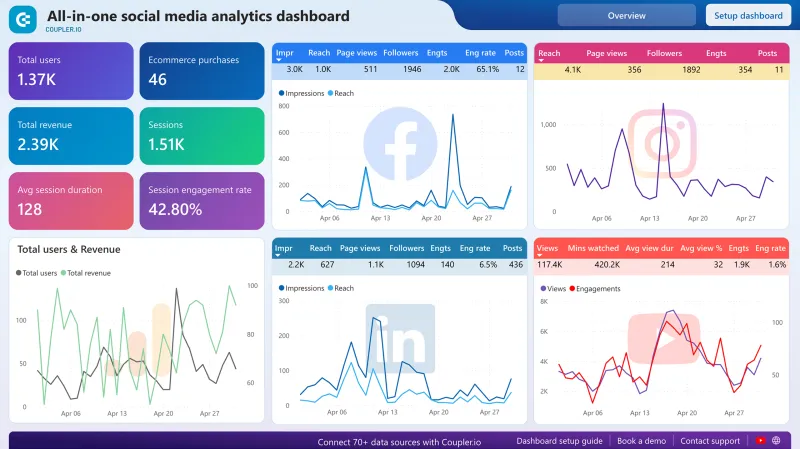
You've got the engagement. You've got the followers. You've got the analytics dashboard that makes you feel like things are moving. And yet — the agents aren't calling. The producers aren't sliding into your DMs with opportunities. The high-level clients who could actually write the kind of checks that change your life? Total silence.
That's not a content problem. That's an audience problem. Specifically, it's the problem of performing for the wrong room.
Two Completely Different Worlds Exist at the Same Time
Here's what nobody talks about enough: the entertainment industry, the film and TV world, the upper tier of creative commerce — these spaces don't operate the way social media does. The people with real power to move your career forward are often the least visible people online. They're not refreshing TikTok to discover the next great screenwriter. They're not scrolling Instagram Reels looking for their next director of photography.
They're at festivals. They're at private dinners. They're reading trades like Deadline and Variety. They're talking to their network — which is a closed loop of people they already trust. They're responding to warm introductions, not cold follower counts.
Meanwhile, you've spent six months optimizing your content strategy for an algorithm that rewards virality, not craft. You've built an audience of people who love what you do but have zero power to move your career an inch forward. That's your vanity audience. And the metrics they generate? Vanity metrics.
This isn't about dismissing those followers — they matter for certain things. But if you're measuring your professional momentum by likes and reach, you're measuring the wrong thing entirely.
What Your Real Audience Actually Looks Like
Your real audience — the people who can actually change the trajectory of your career — is smaller than you think, and they're hiding in plain sight once you know where to look.
For a filmmaker, that might be development executives at mid-size production companies who are actively acquiring projects. For a writer, it could be a handful of literary managers who specialize in your genre. For a creative director or brand storyteller, it's the marketing VPs at companies whose values actually align with your work.
These aren't thousands of people. We're often talking about dozens. Sometimes fewer. And that's actually good news, because reaching dozens of highly specific people is a completely different — and far more achievable — challenge than winning the attention of a mass audience.
The first step is getting brutally specific about who, exactly, has the power to say yes to the thing you actually want. Not the thing that gets you likes. The thing that moves your career.
The Spaces Where Real Decisions Get Made
So where do these people actually live? A few places worth paying attention to:
Industry events and festivals. Sundance, SXSW, AFM, Tribeca — these aren't just marketing opportunities. They're the rooms where relationships get built and deals get made. Showing up with intention, doing your homework on who's attending, and having a clear sense of what you're there to accomplish is worth more than a year of content creation.
Trades and industry press. Getting a mention in Deadline or The Hollywood Reporter — even a small one — carries a completely different kind of weight than going viral on Instagram. It signals that you're operating in a professional ecosystem, not just a social one. This is worth pursuing deliberately.
Closed professional communities. Industry Slack groups, private Discord servers, alumni networks from film schools or fellowships — these are the spaces where working professionals actually talk to each other. Getting into them, and contributing meaningfully, puts you in proximity to people who can help you.
Warm introductions. This one is old school and it still works better than almost anything else. One genuine relationship with someone who can introduce you to the right person is worth more than 50,000 followers. Invest in building real relationships with people one or two steps ahead of you, and ask — thoughtfully, not transactionally — for introductions when the time is right.
Making Your Work Visible in the Right Way
Here's the pivot that a lot of creators resist: you have to be willing to create differently for this audience.
A decision-maker evaluating your work isn't looking for what performs well on social. They're looking for evidence of craft, point of view, and professional reliability. That means your portfolio, your reel, your writing samples — these need to be built for a reader who's evaluating you as a potential collaborator or investment, not as entertainment.
A few practical things that actually move the needle with this audience:
-
A clean, specific portfolio site that makes it immediately clear what you do, what you've made, and what you're looking for next. Not a vibe. A case for why you're the right person for a specific kind of project.
-
Short-form writing that demonstrates your thinking. A newsletter, a thoughtful essay, a perspective piece in an industry publication — these signal that you have a brain and a point of view, not just a skill set.
-
Festival submissions and grants. These create paper trails in the professional world. Even being a finalist for something credible puts your name in front of people who are paying attention to that kind of signal.
-
Direct, human outreach. A well-researched, specific email to someone whose work you genuinely admire — not a mass pitch, but a real note — still works. It requires doing your homework, but it cuts through in a way that social media simply doesn't.
Stop Optimizing for the Audience That Can't Say Yes
None of this means your social presence is worthless. It's a layer of credibility, a way to stay visible, a place to develop your voice. But it shouldn't be the primary measure of your professional momentum.
The creators I've watched actually break through — the ones who get the meeting, land the deal, build the career they were actually after — almost always have one thing in common: they got very clear about who could say yes to what they wanted, and they went directly after those people with intention.
They stopped performing for the room that applauds and started showing up in the room that decides.
That's the shift. And once you make it, a lot of the anxiety around metrics starts to quiet down — because you're finally measuring the things that actually matter.