Chasing Likes Is Costing You Your Career: The Hidden Price of Going Viral
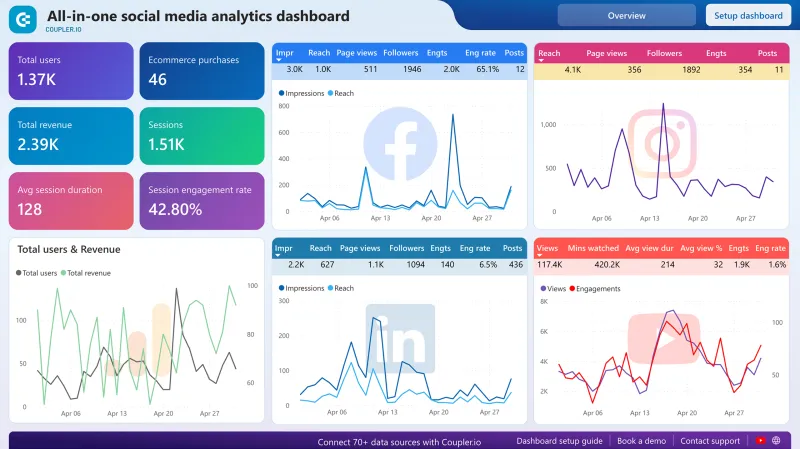
Photo: creator burnout social media phone screen analytics dashboard overwhelm, via static.coupler.io
The Moment You Go Viral and Nothing Changes
Let's say it happens. One piece of work — a short film, a design concept, a creative essay — catches fire. Thousands of shares. Comments flooding in. Your follower count jumps overnight. For about 72 hours, you feel like you've finally cracked the code.
Then the algorithm moves on. And so does everyone who found you.
This is the trap that nobody talks about when they're telling you to "create more content" and "stay consistent." The attention economy is extraordinarily good at making you feel like visibility equals value. It doesn't. And if you're a creator trying to build a real, sustainable career — as a filmmaker, a writer, a designer, a storyteller of any kind — confusing the two might be the most expensive mistake you make.
Why Your Best Work Gets the Worst Return
Here's the paradox that stings: the projects you invest the most into are often the ones that perform the worst by algorithmic standards.
A deeply researched, beautifully crafted short documentary might take you three months to produce. A 30-second trending audio clip with a filter slapped on it takes 20 minutes. Guess which one the platform rewards.
This isn't an accident. Platforms like Instagram, TikTok, and YouTube are optimized for engagement velocity — how fast something grabs attention and how long it keeps people from leaving. Depth, nuance, and craft are not metrics the algorithm tracks. So when you pour genuine creative energy into something meaningful, you're often building for an audience that the platform isn't designed to surface you to.
The result? Creators end up in a psychological spiral. They see their most effortful work underperform, then pivot toward whatever's trending, sacrificing the very thing that makes them distinctive. Their portfolio becomes a graveyard of half-formed ideas and trend-chasing experiments that don't represent who they actually are.
Engagement Metrics vs. Positioning Metrics — Know the Difference
Not all visibility is created equal. This is the reframe that changes everything.
Engagement metrics — likes, shares, comments, views — tell you how well a piece of content performed in a specific moment, on a specific platform, for a specific algorithm. They're real data, but they're measuring the wrong thing if your goal is career longevity.
Positioning metrics are different. They ask: Did this project bring the right people into my orbit? Did it earn me a conversation, a referral, a collaboration, or a client? Did it reinforce the story I want told about my work?
A blog post that gets 200 views but lands you a $10,000 client project is worth infinitely more than a reel that gets 200,000 views and converts nobody. That's not an exaggeration — it's math that most creators never actually do because they're too focused on the dopamine hit of the dashboard.
The Framework: Where Should Your Best Energy Actually Go?
Before you invest serious time into a creative project, run it through three questions:
1. Who specifically will see this, and what will they do next? Vague answers like "my audience" or "people who like this type of content" aren't good enough. Get specific. Is this piece designed to reach a hiring decision-maker at a production company? A brand looking for a creative director? A literary agent? If you can't name the person or describe them in detail, you're creating for the algorithm — not for your career.
2. Does this reinforce or dilute my positioning? Every piece of work you put out is a data point in the story the world tells about you. Ask yourself honestly: does this project make me more associated with the thing I want to be known for, or less? Trend-chasing almost always dilutes positioning, even when it spikes engagement.
3. What's the shelf life? Content that rides a trend has a half-life of days. A well-crafted case study, a signature project, or a piece of work that demonstrates a rare skill can generate opportunities for years. When you're deciding where to put your best creative hours, weight long-shelf-life work heavily.
Strategic Visibility vs. Algorithmic Validation
There's a version of visibility that doesn't require you to post three times a day or dance to whatever sound is trending this week. It's slower, less glamorous, and dramatically more effective for building a creative career.
Strategic visibility means showing up specifically in the spaces where your ideal collaborators, clients, or audience already exist — and showing up with work that speaks directly to what they care about. That might look like a targeted portfolio piece that solves a problem you know a specific industry has. It might look like a guest essay on a platform your target client actually reads. It might look like a case study that documents your process in a way that makes a decision-maker think, "I need this person on my team."
None of that will go viral. All of it can change your career.
The Real Investment Strategy for Creators
Think of your creative output like a financial portfolio. Not every asset should be optimized for the same return timeline. Some content is short-term — quick, topical, designed to stay in the conversation. Some is medium-term — projects that build your reputation over months. And some is long-term — signature work that defines how you're remembered.
Most creators over-invest in short-term content because it provides immediate feedback. The likes come fast. The validation feels real. But they're chronically under-investing in the medium and long-term work that actually compounds.
Rebalancing that ratio is one of the highest-leverage moves you can make. Not by abandoning short-form content entirely, but by being ruthlessly intentional about where your best hours go. Save those for the work that positions you. Let the algorithm have the scraps.
Stop Measuring the Wrong Thing
The attention economy isn't going anywhere. Algorithms will keep rewarding novelty, speed, and emotional reactivity. That's the game being played — but you don't have to play it on their terms.
The creators who build genuinely sustainable careers aren't the ones who went viral the most. They're the ones who got strategic about what visibility actually meant for their specific goals, and had the discipline to protect their best energy for work that served those goals.
Going viral is a moment. Building a career is a decade-long project. Make sure you're investing accordingly.