You're Losing the Room Before You Speak: What the Theme Park Queue Taught Me About Pitching
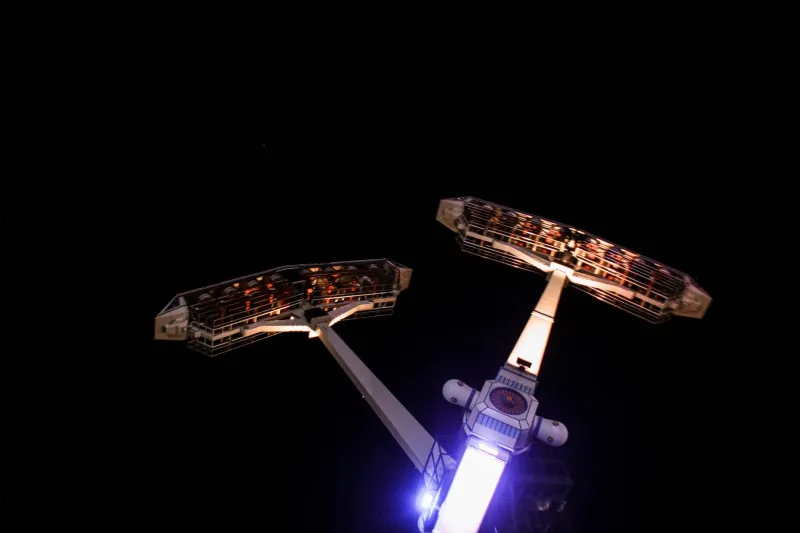
You paid roughly ninety dollars, you've been on your feet since 8 a.m., and now you're standing in a dim hallway while a disembodied voice warns you about the ceiling. And you're thrilled. Nothing has happened yet. Everything is about to.
That's a preshow. It's the deliberate, designed stretch of minutes that convinces you the next thing is worth your attention. Theme parks treat it as load-bearing architecture. Most creators treat it as dead air they forgot to build.
We walk into pitches cold, drop a portfolio link with no runway, open a client call with 'so, tell me about your project,' and then wonder why the room feels flat. The work was fine. The preshow was missing.
The Line Is Part of the Ride
Think about the last great queue you stood in. There's usually a story happening at eye level. Character details on the walls. A countdown you can't quite see the end of. By the time you board, you already know the rules of this world, you already have a role, and you're already a little nervous in the fun way.
That's not decoration. It's four jobs done at once:
- Set the stakes without explaining them.
- Teach the rules without a tutorial.
- Assign you a role so you're a participant, not a spectator.
- Withhold the best thing so the payoff lands.
Now look at how most of us open. We front-load the tutorial. We explain our process before we've given anyone a reason to care about it. We show the best clip in the first four seconds and then have nothing left. We hand over a link like a relay baton and hope the other person runs with it.
Your Portfolio Already Has a Preshow — You Just Aren't Directing It
The top of your homepage is a queue. It is not a summary. Those are different jobs.
A summary says: multidisciplinary creative with eight years of experience. A queue says: here's the weird problem I get hired to solve, and here's why it's harder than it looks. One is a fact. The other is an invitation with a hook in it.
Try this audit. Open your site on your phone, thumb to the top, and give it five seconds. Can you tell what you do, who it's for, and what it would feel like to work with you? If any of those three are missing, your preshow is a blank wall with a logo on it.
One more test that stings but works: send the link to someone outside your industry and ask what they think you'll do next. If they can't guess, you haven't built anticipation. You've built a filing cabinet.
The First Ninety Seconds of a Client Call
Calls have a queue too, and it's usually wasted on logistics.
A stronger open is one line of stakes, one line of role, then a question that hands them the controls. Something like: 'Before we get into the deck — from what you described, the hard part probably isn't the video, it's getting your internal team to agree on the message. Did I get that right?'
You just did three things. You named the real problem, which proves you listened. You gave them a role in the conversation. And you made them correct you or confirm you — either way, they're now leaning forward. The pitch hasn't started and the room is already yours.
Universal's Halloween Horror Nights does a version of this with scare zones. You're not being chased yet. You're just aware that something is off and you can't place it. That's the feeling you want at the top of a call: pleasant, specific unease that something interesting is coming.
Pitch Decks, Posts, and Other Five-Second Queues
Same principle, smaller containers.
Slide one is not a title slide. It's the stretching room. Name the tension. 'Your last three campaigns got traffic but no retention. Here's the pattern we found.' Now slide two has an audience.
A social post's first frame is the queue entrance. If it reads like a caption, people scroll. If it reads like a question they didn't know they had, they stay.
A cold email's subject line is the cast member at the gate telling you the wait time. Be honest and be specific. Vague intrigue isn't a preshow; it's just fog.
Build One This Week Without a Budget
You don't need a budget, a set piece, or a voiceover. You need three sentences you can reuse.
- The tension line. What's the real problem your client is living with?
- The role line. What are you asking them to do or decide?
- The withhold. What's the one thing you're deliberately not showing yet?
Write them down. Put them at the top of your homepage, the top of your deck, and the top of your call notes. Reuse them until they're muscle.
Where the Theme Park Metaphor Breaks
A preshow can't save a bad ride. If your work is thin, no amount of fog machines and dim lighting will hold anyone's attention past the second turn. Anticipation is a multiplier, not a substitute.
The other failure mode is over-engineering. Some creators spend six months on the wrapper — the brand video, the About page, the color story — and never ship the thing people came for. The Haunted Mansion's preshow works because it's five minutes, not fifty. Keep it short, make it specific, then get out of the way.
The ride still has to be good. But nobody rides it if the queue gives them no reason to stay in line.